Apr 3, 2016

The Nepal Earthquake - One Year On: A Celebration of Gratitude and Hope in Gairung Village, Gorkha

I held my breath and braced for impact as our jeep coasted over yet another gaping pothole hidden by a cloud of fine brown stilt. It landed with a soft thud, our driver jerking the wheel sharply to the right to stop our jeep from careening off the mountain cliff and into the abyss. My muscles ached - we’d been bouncing along for about 2 hours – and the entire vehicle swirled with dust. I could feel silt between my teeth, in my eyes and hair. Squinting, I looked at the remote landscape as we bobbed along.

Dotted in the rural hills and between the steep dry terraces, were ancient looking ram-shackled huts, decorated with a patchwork of faded orange and blue tarps. Occasionally, a weathered face would appear in a window frame or from the parapet of a terraced field staring curiously as the jeep navigated its way through clouds of dust, between potholes and over the rocks on the precarious path.

We were in Gorkha (also spelled Gurka), a district that had been devastated during the magnitude 7.8 earthquake that struck Nepal on April 25th 2015, killing over 9,000 people and injuring over 25,000. More than 1,000 people died in Gorkha in a matter of seconds as their homes collapsed on top of them and as hundreds of thousands of tonnes of rock descended on their villages in powerful landslides. For the thousands who were injured, rescue was impossible as roads – a vital lifeline for food, water, medicines and aid – were impassable. 

Nearly a year has passed since the devastating earthquake – the Gorkha district, and Nepal as a whole, has since suffered thousands of aftershocks, a monsoon, a fuel blockade, political unrest, and one of the coldest winters on record.

The Chaudhary Foundation

An organisation that has made an impact is the Chaudhary Foundation. Formed as the corporate social responsibility (CSR) arm of the Chaudhary Group, Nepals’ largest conglomerate, the Foundation mobilised its resources immediately after the earthquake implementing a short-term strategy of relief e.g. the distribution of food, tents, tarps, medicine, and then mobilising a longer-term strategy of rebuilding to help the local people to get a roof over the heads. 

The company CEO, Binod Chaudhary, stoically committed to rebuilding 10,000 homes and 100 schools. The project would be achieved through partnerships with organisations including the Alibaba Group, LG Electronics, PwC and the Indian NGO SEEDS. 

That was a year ago.  

Today, nearly 3,000 homes and 30 schools have been built. Positive sounding numbers but I couldn’t help but wonder how the 7,000 home delta would be bridged.

With first-hand experience of last years earthquake and initial rebuilding efforts I had a vested interested in seeing the progress a year on... and understanding what more could be done to help. 

To provide some perspective – the cost of a shelter home is $750 USD; a school costs an average of $7,000. A shelter takes between 5 – 6 days to build and will provide a safe and comfortable home for an average family of 5 for between 5 – 8 years during which time plans can be made and funding secured for more permanent homes. It puts London rental and property prices into perspective.

Gairung Village

Our jeep slid to a gentle halt. As the dust settled I looked outside and saw an entire village of brown painted shelters with shaped shiny steel roofs framed by long, bright yellow bamboo posts securing the roof to the ground. The pyramid-like shape of the shelters resembling two hands coming together as if to say, ‘Namaste’. 

A rapture of applause greeted our arrival – it was overwhelming, emotional, humbling – a thousand emotions all at once. An older woman with a toothless gummy grin adorned with a gold nose piercing and dressed in beautiful traditional Newari dress grabbed my hand and pulled me forward under an arch. Under it hung a colourful, cheerful ‘Welcome’ sign written in Nepalese. The clapping grew louder as a long thumb of bright red powder was drawn from the crown of my hair to the bridge of my nose and a necklace of vibrant red flowers were strung around my neck.

The purpose of our visit was to conduct a ‘site handover’. Whilst the locals had moved into their homes earlier that winter, they had not yet received their home number-plates. The Nepalis, never shy of a celebration, quickly realised that receiving these number plates was an opportunity for one and mobilised as a village.

A pair of scissors decorated with a bright red ribbon was placed in my hand. Still slightly overwhelmed I tried to make sense of what the situation as what felt like a thousand eyes looked on. I attempted to decipher frantic gesturing and animated Nepali and I finally understood I was being asked to perform the ‘ribbon cutting’. With a tremendous sense of responsibility the scissors came down, the ribbon broke free, and with a cheer, the crowd surged forward to the festival tent.

A ceremony ensued during which we formally handed over the number plates as well as health and hygiene kits to 55 families – impacting about 250 people. There were speeches, singing and dancing and we were invited to tour the homes of many of the villagers. The overwhelming message was a unanimous sense of pride and gratitude.

It was incredibly moving to see something as ‘simple’ as receiving a number plate evoke such a tremendous sense of pride and ownership. It was almost as if the day had become the celebration of a story coming full circle – after the human and economic losses suffered through the earthquake, a miserable monsoon, a fuel crisis, a bitterly cold winter, and now a drought…– the list goes on... the celebration was to commemorate new beginnings and hope for the future.

I can’t imagine what the people living in these remote villages had experienced over the past 12 months. And yet they smile, they laugh, they sing and their eyes shine with hope. The creased, weathered faces of the village elders look over the mischievous grins of the children running between the rubble with sticks chasing the goats. The young women, with their bright pink dresses, perfect complexions and bright red tika welcoming us into their homes. Most of the men in the village are gone – many working in Kathmandu or in search of employment in Dubai and Qatar.

No country, community, government or company can ‘go it alone.’  

The entire day made me realise how many things I take for granted – that I can walk into my flat and turn on a light; the fact that my water comes from a reliable source and that I don’t have to walk two hours up a hill in my bare feet to satisfy the basic necessities of life.

I learn something new with every adventure to Nepal. On this trip and over the past year, I’ve learned about gratitude.  Whilst it’s clear that there is still much to do here in Nepal and that the challenges facing its people are significant, there is a deep-rooted sense of gratitude. For the local people, this gratitude has transformed common days into days of thanksgiving, routine jobs into joy, and ordinary opportunities into blessings.

On a more ‘corporate’ level, I have also learned that working to deliver change in a post-crisis environment such as Nepal, no single entity – government, public or private – possesses all of the necessary powers, resources, or expertise to assure resilience against natural disasters and catastrophic events – be it earthquakes, floods, tornados or tsunamis. Key ingredients to effective solutions include collaborative and organised approaches, leveraging the capabilities and capacity of stakeholders from government, the private sector, local communities and society as a whole. As highlighted by The Chaudhary Foundation’s efforts in Nepal, both short term and long term, as a global community, we’re all going to have to work together with everyone’s best interest in mind to respond quickly and efficiently to current challenges and to prevent such disasters from happening again in the future.


Mar 2, 2016

SUMMIT SUCCESS! Kilimanjaro Climb raises over 25,000 GBP to support research into the health and wellbeing of women and babies

As I type the final members of our team are making their way back to the UK from the heights of Tanzania. We left just over 8 days ago as colleagues, bound together by a common ambition to reach the Roof of Africa. We return to sea-level bound by new friendships and memories that will last a lifetime – friendships built through shared laughs, fears, experiences, and a shared sense of team as we plodded our way to the 5,895m summit of Mount Kilimanjaro.

As individuals we pushed ourselves to our personal limits, to the nth degree and beyond, putting one heavy altitude weighted foot in front of the other whilst being spurred on the journey by our collective sense of team and sights on the ultimate objective.

One thing that I have learned from this adventure is the importance of celebrating success in the progress toward a goal. The goals of this 4th PwC Wellbeing of WomenKilimanjaro Climb were to (1) reach and surpass our 20K target and (2) challenge ourselves our journey to the summit of Kilimanjaro (3) have fun!

‘Fresh’ off the plane last Saturday evening, our PwC team sat down for our very first dinner together in our hotel in Arusha, Tanzania. Anticipation was running high. It was here that I realised just how much we’d achieved already – not only had we put together a strong, connected team with a common vision and common goals, we’d also actually made the preparations to say ‘Yes, let’s do this..!’  Shiny new kit had been purchased, flights had been taken via cities who’s names we could hardly pronounce, Tanzanian visas had been sorted, overflowing bags had arrived, hotels had been booked, new boots had been broken in… and nearly £10,000 had already been raised for Wellbeing of Women through the hard work, creativity, passion and commitment of the team.

So much achieved, so much to celebrate - and we hadn’t even set foot on the mountain yet!

The trip continued to be jam-packed with successes. At the end of our first day we crammed into our mess-tent, bundled into our warm jackets and hugging hot cups of tea we raised a toast to the days achievements. Everyone was smiling. Everyone was laughing. The team had made tremendous progress already – Camp 1 reached – and it was only a matter of ‘onward and upward’ to reach the following day’s objective.

The days on the trail passed quickly, broken up through ‘sippy-sippy’ water drinking stops, eating stops, photo-stops, sunscreen application stops… all the while conversations flowed, learning more about each other and the environments we were passing through.

When the team reached our ‘base camp’, 'Kibo Hut' at 4,750m (almost as high as the summit of Mont Blanc!) in the early afternoon before our ‘summit push’ the effects of altitude were starting to show. We walked across the saddle between Mawenzi peak and Kibo, with laborious breaths, our packs suddenly feeling heavier and every step harder than the last. This did little to dampen team spirit as we settled in for the afternoon and began mentally preparing for the challenge ahead. We would be leaving camp at 11.30pm for our ascent.
Heads down, our Kilimanjaro conga-line snaked its way through the seemingly endless switchbacks and zig-zags over the volcanic scree. We stopped every hour for no more than 5 minutes to refuel and reassess our progress. It wasn’t until I looked up to see the familiar rocky final section that I realised that we’d reached the  first of the three summits – Gillmans Point (5685m) – in record time and in the dark..!

We then continued on with a further 3-hour round trip to the summit, Uhuru Peak - the highest point of all Africa. The route took us through a moonscape of volcanic rock and remnant glaciers with their impressive ice cliffs.

I can safely say that I’ve rarely seen such an incredible sunrise. The conditions were clear and there were panoramic views over the crater, to Mawenzi and Mount Meru looking very small below us. The view from the final summit was quite literally ‘breathtaking’.

Despite our cold fingers, desperate gasps of rarefied air, throbbing heads, and rosy cheeks, we were laughing as the dawn broke over the summit crater in spectacular fashion and we celebrated our combined successes. A ‘journey’ that had started with an email saying ‘Yes! Sign me up!’ led to these happy (tired!) faces, new friendships and memories to last a lifetime. Additionally, we succeeded in our challenge to surpass our fundraising target, raising over £21,000 for Wellbeing of Women – money that will go toward funding research to improve the health of women and babies – and leave a legacy that will long outlast aching feet, sore muscles and throbbing heads..!

Climbing Kilimanjaro (or any mountain for that matter!) is no different from any other major challenges that we face in our lives. Whether we want to start a new career, have a healthier lifestyle or mend a broken relationship - we’re all climbing mountains of sorts. These experiences require us to be stronger than we think we are, endure more than we think we can, and become more than we dreamed possible.

Nearly £100,000 has been raised for the Wellbeing of Women through these PwC led Kilimanjaro climbs thanks to the hard work, dedication, determination, creativity and fortitude of some of the most amazing people that I’ve ever shared a mountain with. Once again it highlights why I love climbing - not only for the breathtaking views, the physical challenge, and the personal sense of achievement, but also for the inspiration gained and insights shared by the people you meet along the way

It's not too late to donate if you'd still like to show your support. All proceeds go to Wellbeing of Women and can be made via the link below:


 Thank you to the amazing team – Andrea, Alexandra, Larice, Lucy, Maisie, Patrick, Saxon, Urszula, Victoria - and our amazing team of porters and guides - for the wonderful trip memories; your humour, honesty, commitment, and enthusiasm through thick and thin (air) will never be forgotten and I can't wait to share another mountain with you again soon.


Huge thanks also to our sponsors - Thalgo for their wonderful suncream and spa products; Meatsnacks for the delicious beef jerky and Sherpa Adventure Gear for the donation of prizes for our pub quiz fundraiser.


Oct 25, 2015

The People You Meet: The Chaudhary Foundation & Encouraging Private Sector Investment to Rebuild Nepal...

"We rise by lifting others." 
~ Robert Ingersoll (American lawyer & political leader)

Immediately after the magnitude 7.8 earthquake rocked central Nepal on April 25th, Nepali businessman Binod Chaudhary rushed from Chitwan National Park to back to Kathmandu.  As the dust from the earthquake settled, the full devastation of the quake became apparent. The death toll rose steadily day by day to reach nearly 9,000 people with over 25,000 people injured. According to UN estimates, 8 million people — more than one quarter of Nepal's population — were affected by the disaster.

In addition to being a businessman and one of the 1,500 richest people in theworld, Binod Chaudhary is also a proud Nepali who recognised that now, more than ever, Nepal needed his support. Eight schools operated by one of his businesses were turned into shelters and a large-scale campaign was kicked off to distribute his company’s famed Wai Wai instant noodles and other food, as well as juice, water and medical supplies.

Deeply affected by the earthquake and seeing first-hand its devastating impact, Binod committed to supporting the rebuilding of 10,000 homes and 100 schools across the country.  Through his Foundation, $2.5 million was pledged to restore schools and homes destroyed or damaged by the quake. Since that day, through its global network of businesses, the Chaudhary family have worked tirelessly to make the Foundation a hub for private-sector donations, achieving traction and results where the government, IGOs and NGOs have struggled or failed. The Foundation has already been successful in building an initial 1,000 transitional bamboo-and-plaster homes and has committed to working with partners and donors globally to construct another 9,000.

Binod’s localised approach and promise of transparency has drawn pledges from Chinese e-commerce giant Alibaba and South Korean company LG Electronics, SEEDS India, Tata Group and the PwC Foundation. The Foundation maintains an open appeal for increased private sector support in helping to provide homes and schools to the vulnerable.

“Our hope is that very quickly we’ll be able to find the right partners who will support us in doing jointly the 10,000-home target that we’ve set for ourselves, and hopefully much more than 100 schools that we’re planning to restore.”

I was introduced to the Chaudhary Family at a Nepal Round Table Discussion hosted by global professional services firm, PwC. We met to discuss ways in which the private sector working with governments, IGOs, and NGOs could provide resources to support the Foundation’s resilience and rebuilding efforts.  Having been in Nepal during the April and May earthquakes and having seen the scale and complexity of the relief and rebuilding efforts required, I was inspired by his approach where one organised locally driven effort can be more effective than many well-intentioned disparate efforts.

I had the opportunity to visit one of the rebuilt communities in Nepal earlier this month. I confess, I approached the visit with mixed feelings fuelled by the negative reports in the media about the Nepal government’s floundering reconstruction efforts amid political disturbances, partisan fighting and stories of $4.1 billion in aid unaccounted for.

But what I found was incredibly uplifting. Through their extensive network in-country and relationships with businesses around the world, The Chaudhary Foundation have been successful in helping to build what are called “transitional shelters” that cost $750 each. The shelters reflect a quake-resistant design with bamboo sticks embedded a few feet into the ground.  The beauty of the approach is that it’s both simple and scalable.

The Chaudhary Foundation team attribute their success in being on-the ground with first hand communication and engagement with local communities. They work with local people to identify those most in need, including single women or those who have no means of earning a living. Building materials are delivered and building experts train and help local people to build their homes, closely supervising the tasks of creating bamboo grids for a sturdier foundation and plastering the walls for better protection from hot summers, wet monsoons and cold winters.

Following a tour of his modest home, one of the residents of a ‘transitional shelter’ village just outside of Bhaktapur, proudly told me that his structure will last at least five years, giving him and his family time to make arrangements for more permanent residences without having to take loans or cut back on food. Holding his baby daughter in his arms he beamed, “I am so proud and happy with my new home.” His was one of the biggest smiles that saw during my visit to the country and one that I’ll not soon forget.

No country, community, government or company can ‘go it alone.’  What becomes clear from conversations with organisations working to deliver change in Nepal is that in today’s complex, hyper-linked environments and communities, no single entity – government, public or private – possesses all of the necessary powers, resources, or expertise to assure resilience against natural disasters and catastrophic events – be it earthquakes, floods, tornados or tsunamis. Key ingredients to effective solutions include collaborative and organised approaches, leveraging the capabilities and capacity of stakeholders from government, the private sector, local communities and society as a whole. As highlighted by The Chaudhary Foundation’s efforts in Nepal, both short term and long term, as a global community, we’re all going to have to work together with everyone’s best interest in mind to respond quickly and efficiently to current challenges and to prevent such disasters from happening again in the future.

Oct 17, 2015

Rebuilding Dalchoki School - "A journey of a thousand miles must begin with a single step..."

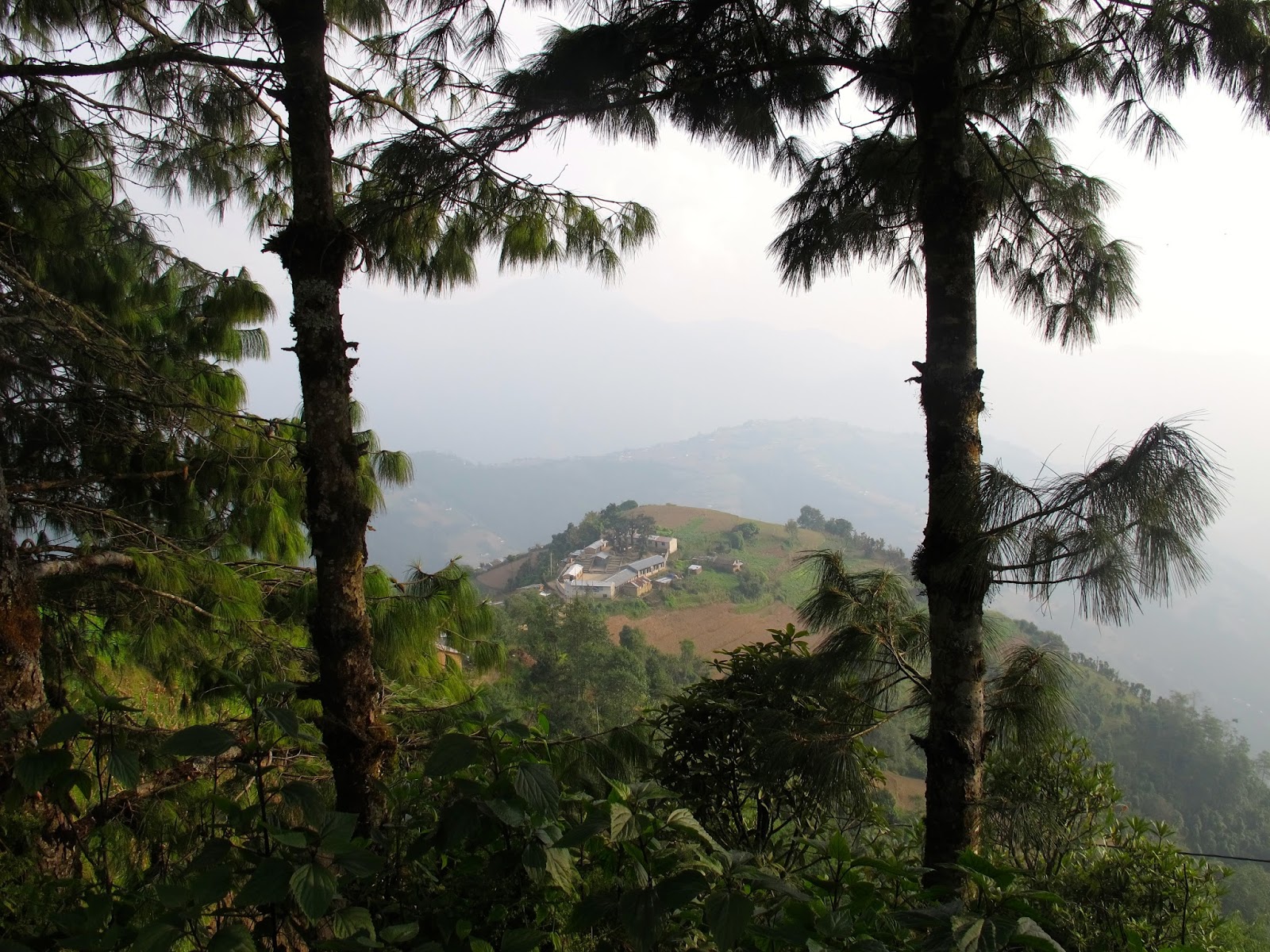
Our jeep climbed higher and higher via the winding dirt road, the trees parting occasionally to reveal a panoramic vista of cloud covered mountains and the sprawling bustling capital city of Kathmandu far below. From our vantage point we were offered breathtaking views of rolling green hills dotted with temples, small farms and local people forging a life out of the earth. After weeks of planning and countless conversations, lots of worrying, we were on our way to the picturesque village of Dalchoki to take the first steps to Rebuild Dalchoki School.

I’d never visited Dalchoki before. Up until that point, the village had been no more than an unpronounceable name on a map – 2.5 hours south of Kathmandu, high in the hills and far from the more familiar terrain of the Khumbu. I’d seen pictures of the crumbling, windowless classrooms, ‘temporary’ bamboo classrooms, and wide-eyed, eager students walking for up to three hours over the hills to sit on the long wooden benches and build their educational foundations – Grades 1 - 9, ages approximately 6 - 13.
These temporary classrooms are cold, damp and susceptible to the elements – wind, rain, and snow. It seemed like a world so incredibly far from one that I’d been fortunate enough to experience as a student.

In Dalchoki, over 90% of the houses collapsed in the earthquake on April 25th, 2015. Dalchoki’s main school, 'Shree Goth Bhanjyang’ once welcomed approximately 450 students and 17 teachers from surrounding villages. In the earthquake, the school and its 11 classrooms were either badly damaged or completely destroyed.

My colleague and friend from Sherpa Adventure Gear, Rijuta, taught in Dalchoki for two years and spoke passionately of her experiences in the village, detailing numerous ongoing challenges faced by the school and its students in the aftermath of the earthquake. Together with the wider management team we all agreed that supporting the rebuilding of Dalchoki School would be a perfect project for the Paldorje Education Foundation’s ‘Earthquake Relief Fund’, established by Sherpa Adventure Gear.

Arrival in Dalchoki

Arrival in Dalchoki felt like arriving at ‘base camp’ at the start of an expedition. We rolled out of the jeep and navigated our way down a muddy path past old farmhouses, goats and chickens, and curious children greeting us with the traditional ‘Namaste’. Initial views were breathtaking… The school is perched on the rolling ‘summit’ of a hill overlooking the Kathmandu valley. The views it offers make up the ‘patchwork’ of breathtaking vistas that personify Nepal – green terraced fields cut into rolling green hills, set against the Kathmandu valley and framed by a panorama of the snow-capped Himalayas and some of the highest mountains in the world.

A narrow dirt path leads to the shared area of the school, a large and solid concrete courtyard fronted by a steps leading up to a temporary classroom made of bamboo, the principals office and teachers quarters. Much of the courtyard is occupied by a temporary classroom and remaining rubble from the damaged classrooms. To the right of the courtyard are two long single story buildings. Most of the classrooms in these buildings have been declared unsafe and are closed, awaiting demolition.  Students now receive their studies in the temporary bamboo classrooms. 

To accommodate the student numbers and ongoing educational needs, ‘unsafe buildings’ have been made ‘slightly useable’ by removing the windows, doors and most of the walls so that the classrooms are deemed to be safer and, in the event of another earthquake, the students can evacuate more quickly… Whist the evacuation will be easier, the average winter temperatures is about 5 degrees and the hill receives a cold, damp breeze, the downside of removing the walls, windows and doors are that students will soon study in completely unsuitable conditions. There is a double-story classroom which backs onto the courtyard which retains structural damage and cracks but still being used.

We spoke with the students about ‘going to school’, many of them sharing that they walked between 2 – 3 hours each way and up hill just to get to school, to learn, to be with their friends, to see their teachers, to have fun and follow their dreams of becoming teachers, doctors, psychologists and engineers.

The school principal outlined some of the challenges faced both before and after the earthquake. Even before the earthquake the school faced space-constraints. The numbers of students continue to rise but the school infrastructure can’t accommodate. Additionally, due to its remote location, it’s difficult to find teachers to teach certain subjects, particularly the sciences. As a result, many of the students are falling behind the national averages and struggle to pass the national exams and failure rate is disproportionately high compared to the rest of the country.

Whilst the government has ‘promised’ to make funding available to support the rebuild, 6 months have passed and there has been no sign of commitment or progress. Only politics and excuses. And a ruthlessly cold, bitter winter is on its way.

Children continue to live in fear, many still suffering trauma and stress. Support is needed through counseling and simple motivation – e.g. through the provision of food after their 3-hour walk to get to school, and a safe and fun learning environment – to get them back into the classrooms and provide them with collaborative, safe learning environments. One student commented, ‘"I'm so glad that I can go to school and see my friends, but I'm also feeling anxious to think that my school may collapse when an earthquake happens again. I will be more glad if we have a safer place to study."

During our visit to the classrooms, our conversations with the principal and teachers, and our engagement with the students, it became crystal clear that the support of the Paldorje Education Foundation, ‘Earthquake Relief Fund’ can make a tremendous difference to improving the quality of life for 450 bright young minds in Dalchoki. The incredible and generous support received from donors around the world, can and will, provide these bright young minds and their families with a stronger foundation upon which to build their future. 
Next steps

We'll continue to engage at the local level through ongoing site visits to ensure that the relevant planning and conversations take place and that the appropriate registration and building procedures followed to ensure that there is local engagement in driving the rebuild. As much as this is a 'rebuilding project' with the objective of having a safe haven for education, it is also a tremendous opportunity for local employment and skills-training. There is a lot of work to be done before we put shovel to soil...

"A journey of a thousand miles must begin with a single step..."
-Lao Tzu


Oct 15, 2015

The People You Meet Along the Way: A Nation Rebuilding

Nearly six months have passed since the devastating earthquake struck Nepal on April 25th, 2015. Life in the streets of Kathmandu has returned to normal. The easy-going ‘buzz’ has returned with the familiar honking of horns, cars kicking up dust and shops once again open with colourful smiling local people selling their trinkets on the streets. Rather than the ‘great quake’, the topic on everyone’s lips is the current fuel crisis in Nepal which has resulted in fuel rationing,  line-ups of hundreds of thousands of cars and motorcycles along the streets and the cost of fuel sky rocketing.  

Flying into Kathmandu last week I was relieved to note that the tapestry of bright orange, blue and green tents and tarps which once formed a patchwork across the country was significantly less prominent. Today, shiny tin and corrugated iron roofs shine brightly against a lush green backdrop of trees in the countryside and amidst the brown dust of the city. 

Organised piles of bricks, wood and other debris now sit alongside the once iconic historical sites. On Tuesday I visited Bhaktapur, once home to some of the most beautiful examples of ornate terra-cotta and carved wood Nepali monuments, temples, palaces, pagodas and religious shrines. The neatly piled bricks brought back vivid memories of a chaotic and hot day I spent helping to clear bricks and clamouring over devastated homes in early May, shortly after the earthquake. The atmosphere then was of shock and disbelief. Today the atmosphere is one of gratitude for what was left behind, hope for the future and a deep rooted determination to move forward. A brick pedestal that once served as the foundation to an ornate monument, now provides the perfect perch for groups of boys to fly their kites, rising high against the warm breezes.

Aftershocks are now the ‘new normal’. It’s not uncommon to pause mid-conversation, raise an eyebrow and comment, ‘Did you feel that…?’ Only to then continue on as normal as the shock was deemed to be nothing more than a 3.5 or a 4…  

Whilst there are inspiring signs of progress in Kathmandu, in the more rural areas, thousands of people are still living in tents and under tarps which provide little warmth and protection from the elements. Many communities are still missing the vital parts of a daily life: schools, stores and monasteries. There are continued promises of aid and respite from the government, but things move slowly here and often times the local agenda is buried among the tectonic shifts of a constantly moving political agenda. The current fuel crisis is an example of this.

I’ve spent the week working with Sherpa Adventure Gear’s Paldorje Education Foundation and focusing specifically on a school rebuilding project in the remote and rural village of Dalchoki. The school is attended by approximately 445 students, many of which travel up to 3 hours (each way) to get to and from school.  According to UNICEF estimates, almost 24,000 classrooms were damaged or destroyed in the earthquake, impacting at least 950,000 children. My work this week has focused on understanding what rebuilding activities are taking place at the local level, the processes that underpin these activities, and the level of community engagement and ownership. What I’ve found is that ultimately, for any rebuilding project to succeed and to have the greatest possible impact in the community (employment, skills transfer, and local empowerment) there needs to be significant local ownership and engagement. This has now started in Dalchoki and it’s inspiring to have been part of the first steps in bringing positive change to this friendly rural village. 

A wonderful example of positive change and engagement at the local level was sharedduring a visit to the Chaudhary Foundation’s Bhaktapur shelter site, just outside of Kathmandu. As part of its commitment to supporting the rebuilding efforts, The Chaudhary Foundation has pledged to sponsor the building of 10,000 transitional homes and 100 schools. During our Bhaktapur site visit, we chatted with the local people who showcased their community of 60 transitional shelters. It was inspiring to sense the pride in their eyes as they shared the features of their simple yet comfortable homes – one solid room with two windows and a roof over their heads. As most of their lives are spent outside in the fields, working the land or interacting with others in the community, there’s little need for anything more. Happy people don’t have the best of everything. They make the best of everything.

I learn something new with every adventure to this amazing country. Having been on numerous expeditions in Nepal I’ve learned a tremendous amount from the Sherpas, from my guides and team mates and from those people I’ve met along the way to the summits of some of the highest mountains in the world. These lessons have been about teamwork, decision making, and agility. During my topsy-turvy time in April /May this year, the theme of my journey was resilience as I learned from the local people that life isn’t about how high you climb but how well you bounce. On this trip, I’ve learned about gratitude.  Whilst it’s clear that there is still much to do here in Nepal and that the challenges facing its people are significant, there is a deep-rooted sense of gratitude. For the local people, this gratitude has transformed common days into days of thanksgiving, routine jobs into joy, and ordinary opportunities into blessings.